Trace and access cover, explained before you call anyone
Many buildings insurance policies pay a specialist to find a hidden leak, open up the floor or wall to reach it, and put that damage right again. That part of the policy is called trace and access.
Call an engineer0333 567 2646A guide from ADI Leak Detection, who have spent over ten years tracing hidden leaks for insurance claims in England, Scotland and Wales.
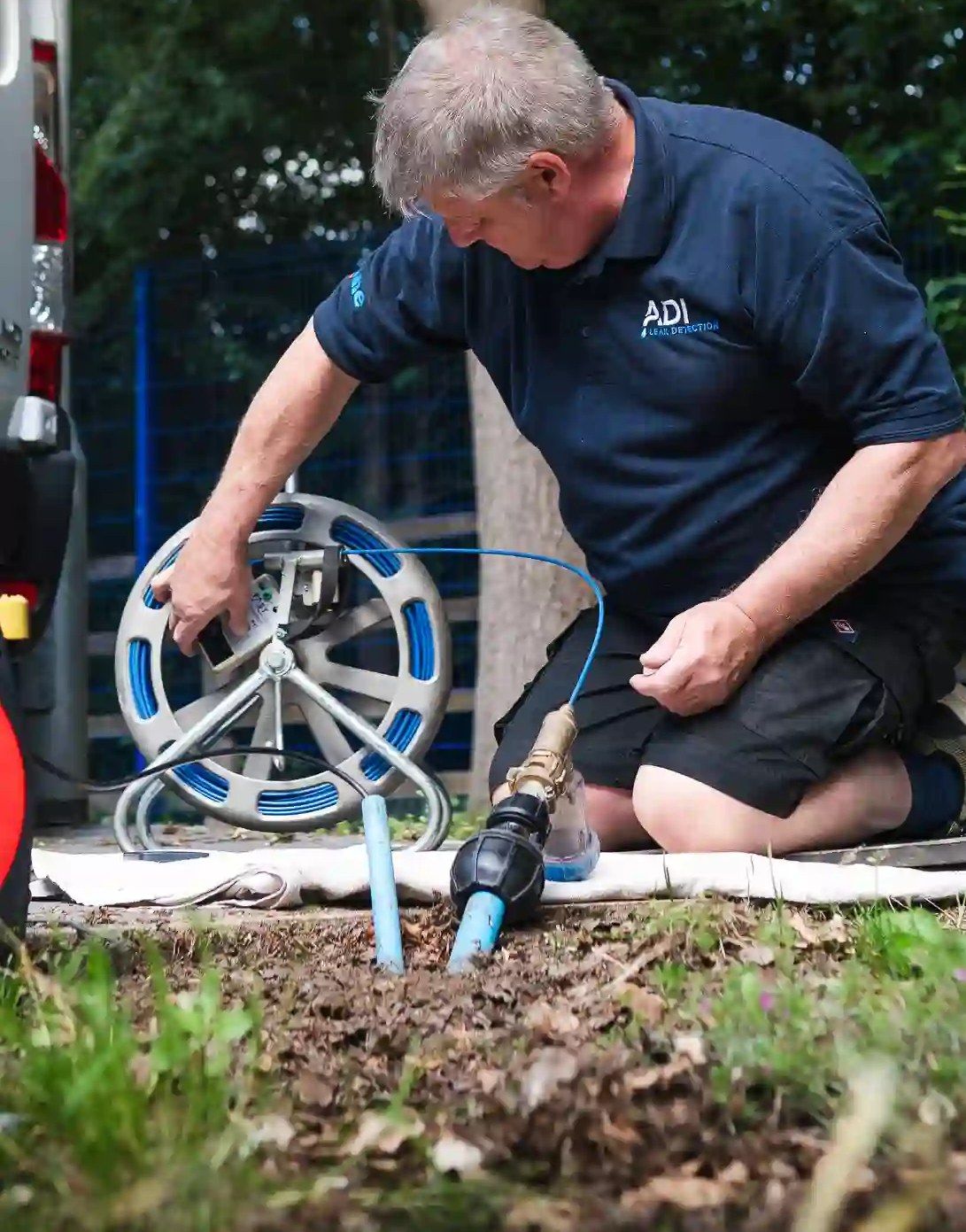
What trace and access cover pays for
Think of it as the cost of the search. Where a policy includes it, it usually pays for three jobs, up to a limit you'll find in the small print of your schedule.
Finding the leak
A specialist uses non-invasive kit to track the leak down to one spot, whether it sits under a concrete floor, behind tiles or in the ground outside.
Getting to it
Lifting boards, cutting into plasterboard or breaking out screed, so that the leaking pipe can be seen, confirmed and repaired.
Putting back what the search disturbed
Relaying the floor, replastering the wall and making good the damage caused by finding and reaching the leak.
- What affects the cost, and how far the limit stretches
What trace and access doesn't pay for
Mending the pipe
Trace and access stops at the leak. The repair to the joint or pipe is a separate cost: some buildings policies cover it and some don't, so check your wording.
The water damage
Stained ceilings, ruined flooring and soaked belongings go under escape of water, a different section of the same policy with its own excess.
Water from outside
Rain through a roof, a blocked gutter or damp coming through a wall is usually another kind of claim. A burst pipe is the exception.
How the claim works, from first damp patch to settled invoice
Check if your home insurance includes trace and access
Policies word this differently, and the only one that matters is yours. Answer four questions with the paperwork open and you will know what to ask your insurer.
Nothing you tick leaves this page.
Either way, an engineer can tell you on the phone whether it sounds like a leak they can trace.
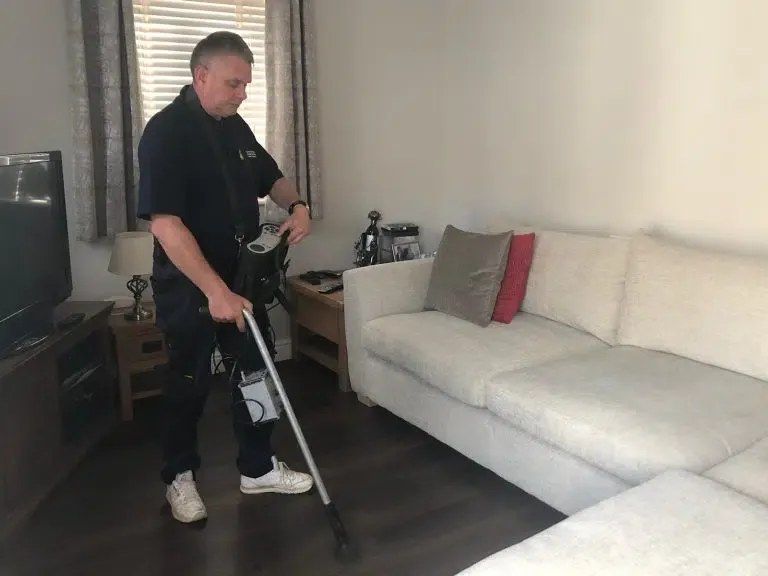
What happens during a leak detection visit
You call and describe what you have noticed
An advisor asks about the symptoms, the building and where the pipes run. That tells them how likely the leak is to be found, and which engineer to send.
A whole working day is booked for you
Each engineer takes one job a day. Nobody is watching the clock when a leak turns out to be awkward.
The search narrows
Thermal imaging, tracer gas, listening equipment and moisture readings, in whatever order your leak calls for. How the leak gets found, method by method.
One spot is marked
The readings are narrowed to one place, usually a single room or less. Opening up and the repair are quoted separately, because only exposing the pipe proves the leak is there.
A repair, if the day allows
When there is time left, the leak can often be fixed there and then.
Your report arrives within 48 hours
Written up by the engineer who came, ready to send to your insurer.
The leak detection report your insurer will ask for
Insurers want proof before they pay the trace and access part of a claim, and the leak report is that proof.
The engineer who came to your home writes it, with photos and, where it helps, video. The reporting team then sets it out in the format insurers work with and emails it to you.
Emailed to you within 48 hours of the investigation.
What it records
- Where the leak was found
- How it was found, and with which equipment
- Where to open up to reach it, and why there
- Photographs, and video where it was needed
- Written by the engineer who attended
Is trace and access cover worth it?
For most homes, yes.
Pipes run under solid floors, inside walls and beneath driveways, and a leak in any of those places can't be found by looking. The search is skilled work with expensive kit. Bear in mind it is only the start: after it comes the cost of opening up and putting everything back.
If your policy has the cover, find out the limit now, while nothing is dripping. If it doesn't, ask your insurer what adding it would cost at renewal. And if you still have questions, these are the ones people ask before booking.
Three things to ask your insurer
- Does my policy include trace and access, and what is the limit?
- Does it only pay once the leak has caused visible damage?
- Can I choose my own leak detection company?
Trace and access questions, answered
Short answers to the questions people ask most about trace and access. Booking, flats and boilers are covered on the questions page.
What does trace and access cover actually mean?
It is the part of a buildings insurance policy that pays to find a leak you can't see (the trace) and to open up the floor, wall or ground to reach it (the access). It usually also pays to put back what was disturbed along the way.
Is trace and access included in home insurance as standard?
Often, but not always. Many buildings policies include it, usually inside the escape of water section, while contents-only policies rarely do. The only way to know is to check your schedule or ask your insurer.
Does trace and access pay to fix the leaking pipe?
Not usually. It stops at finding and reaching the leak. Mending the pipe or joint is a separate cost: some buildings policies cover it and some don't, so check your wording.
Can I choose my own leak detection company?
Usually, yes. Some insurers send a contractor of their own, and others let you pick a specialist and claim the cost back. Tell your insurer who you'd like to use when you report the leak, and ask whether they need to approve it first.
How long does a leak investigation take?
A whole working day is booked, with one engineer on one job. Some leaks turn up in a couple of hours, and if there is time left the leak can often be repaired the same day.
How soon will I have the report for my insurer?
Within 48 hours of the investigation. It is written by the engineer who came, with photos and, where it helps, video, and set out in the format insurers work with. What to do with it next.
Talk to an engineer before you call your insurer
The first thing they'll ask is what you've noticed and where, so they can judge whether it sounds like a leak they can trace. They'll also tell you what the day would cost and what your insurer is likely to want to see.
Call an engineer0333 567 2646Lines open 7:30am to 6:30pm, Monday to Friday.